


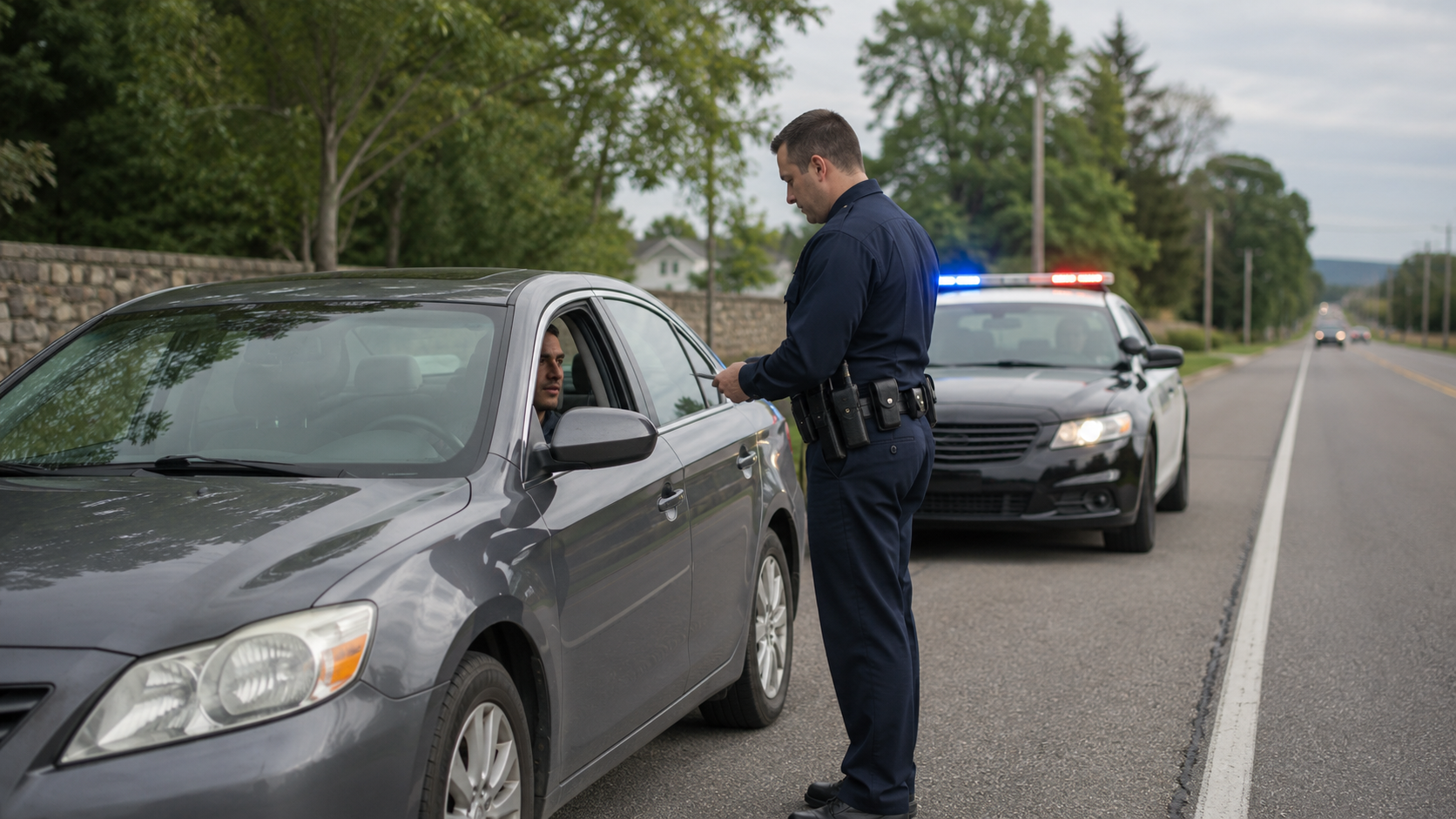
The traffic stop may have started with something small. A turn. A taillight. Speed. A rolling stop. Then the officer said your license was suspended.
Maybe you were on your way to work. Maybe you were picking up your child. Maybe you thought the suspension was over because you paid a fine, waited out the suspension period, or never received another notice from PennDOT.
Now you have a citation for driving on a suspended license in Pennsylvania, and you need to know what this means before you make your next move.
That is a stressful place to be, especially if you depend on your license for work, family, school, medical appointments, or basic daily life. You may be wondering whether you should pay the ticket, whether you have to appear in court, whether this affects your restoration, and whether driving again could make everything worse.
Those questions matter. A suspended-license citation is not just about the fine printed on the ticket. The reason for the suspension, the exact charge listed on the citation, your driving history, and whether PennDOT has restored your operating privilege can all change what comes next.
Before you pay, miss a deadline, or walk into court without a plan, it helps to understand what the charge means, what PennDOT’s records show, and why one quick decision can create more problems than the original stop.
Why Your Pennsylvania License May Still Be Suspended
In Pennsylvania, driving on a suspended license is usually charged under 75 Pa.C.S. § 1543. Put simply, the issue is whether you drove on a highway or trafficway after your operating privilege was suspended, revoked, or canceled and before PennDOT restored it.
That last part matters: restored.
Many suspended-license cases start with confusion. Your suspension period may have ended. You may have paid a fine. You may have handled an old ticket. But if another PennDOT requirement is still open, your operating privilege may not be legally restored.
Getting your license back can require more than waiting out the suspension period. PennDOT must show your driving privilege as restored before you can legally drive again.
That is where drivers get blindsided. You may not have been trying to ignore the law. You may have believed you did what PennDOT or the court required. But in court, the question becomes specific: was your operating privilege restored on the date of the stop?
Why the Reason for Your Suspension Changes What Happens Next
Not every suspended-license case carries the same risk.
Some suspensions are connected to unresolved traffic citations, missed court deadlines, failure to respond to a ticket, insurance problems, or incomplete PennDOT restoration requirements. Others are tied to DUI, chemical-test refusal, ignition interlock, or another alcohol- or drug-related driving issue.
That difference can change the penalties, the court strategy, and the urgency of the case.
Many non-DUI suspended-license charges under Pennsylvania law are summary offenses that can carry a $200 fine, but that is not the full picture in every case. The penalties depend on the specific statute section, the reason for the suspension, the driver’s history, and whether a narrower statutory rule applies.
If PennDOT’s records show that your operating privilege was still suspended, revoked, canceled, or not yet restored on the date of the stop, a conviction can create additional license consequences. In many cases, that can mean additional suspension time. If the issue involves a revocation, the consequence can be more serious. Certain limited suspended-driving situations may also fall under different fine rules, which is why the exact charge and restoration status matter so much.
DUI-related suspended-driving charges are different. They can carry mandatory jail exposure, higher fines, and more urgent defense concerns. That is why the fine is only part of the picture. What matters next is why your license was suspended, what exact charge appears on the citation, and what PennDOT still says needs to happen.
Those answers shape the next move.
Why Paying a Suspended-License Ticket Too Quickly Can Be Risky
A suspended-license ticket may look like something you can pay online or handle quickly. That is not always the safest move.
Paying the ticket can be treated as accepting responsibility for the charge. Once that happens, the issue may not be limited to the money you paid. A conviction can affect your license history, restoration timeline, ability to drive legally, and, for some drivers, job security.
Before you pay, it is important to understand what the citation is actually tied to. Was your operating privilege still suspended on the date of the stop? Was the suspension DUI-related? Were you eligible for restoration but not officially restored? Does the citation fall under the general suspended-driving statute, a DUI-related subsection, or a narrower rule for certain other suspended-driving situations? Could a conviction add more suspension time, delay restoration, or create another PennDOT problem?
If you do not know those answers, guessing is risky.
At Hadeed Law, the focus is not just on the face value of the citation. The details matter, including why the license was suspended, what happened during the stop, what the citation says, and what still needs to be addressed before you can drive legally again.
What You Need to Know Before Going to Court for a Suspended-License Citation
If you have a court date for charges of driving on a suspended license in Pittsburgh or elsewhere in Western Pennsylvania, do not walk in assuming the case is simple.
The citation is only one part of the picture. The exact statute section, court date, location of the stop, additional citations, and PennDOT restoration status can all affect how the case should be approached.
A PennDOT restoration requirements letter can show what still needs to be completed before your driving privilege can be restored. Depending on the situation, that may involve a restoration fee, proof of insurance, ignition interlock, medical paperwork, court compliance, or another requirement.
What happened during the stop also matters. Did the officer explain the suspension? Were you cited for anything else, such as failure to maintain insurance, failure to maintain lanes, speeding, improper turns, or a traffic-control-device violation? Were you driving a work vehicle, company vehicle, or commercial vehicle?
The goal is not to panic. The goal is to understand what you are walking into before you go to court.
What if You Need Your License for Work?
A suspended-license citation feels different when your paycheck depends on driving.
If you drive a truck, delivery vehicle, company vehicle, rideshare vehicle, or any vehicle for work, the problem may not stay inside the courtroom. A suspended-license citation can raise questions with an employer, insurer, dispatcher, or licensing agency, especially if the case involves a CDL, a company vehicle, or a suspension tied to a prior serious driving issue.
Commercial drivers should not treat a suspended-license citation like a routine ticket, especially when the issue involves whether they were legally restored before getting back behind the wheel. The type of license you hold, why your license was suspended, what vehicle you were driving, and the exact charge listed on the citation can all affect your path forward.
If your job depends on your ability to drive, you need a clear picture of the suspension, restoration status, and citation before making decisions that could affect both your case and your livelihood.
When a Suspended-License Stop Reveals Other Traffic or Insurance Problems
A suspended-license stop does not always end with one citation.
An officer might also cite failure to maintain insurance, registration problems, failure to maintain lanes, speeding, improper turns, reckless driving, or failure to obey a traffic control device. If there are warrant concerns, vehicle issues, unpaid tickets, missed court deadlines, or proof-of-insurance problems, the situation can become more complicated quickly.
That is where the next choices matter. What you sign, whether you miss court, whether you keep driving before restoration, and whether you understand PennDOT’s remaining requirements can all affect what happens next.
When one stop reveals more than one unresolved issue, quick assumptions can make the next step harder than it needs to be. Before you plead, pay, miss court, or keep driving, it helps to understand what the citation means, what else may be involved, and what still needs to be fixed before you are legally restored.
Can You Fight a Driving on a Suspended License Charge in PA?
Sometimes, yes. But the right strategy depends on the facts.
A suspended-license case may involve questions about PennDOT’s records, restoration status, the exact subsection charged, the reason for the suspension, notice or paperwork issues, or whether the citation was written correctly. In other cases, the most important step is getting clear on what PennDOT still requires and what can be addressed before your court date.
A sound defense strategy does not always mean “fight everything.” The better question is what the Commonwealth can prove, what needs to be solved first, and what steps may reduce avoidable complications.
Samir Hadeed reviews suspended-license cases with the full picture in mind, including the citation, the driver’s suspension history, PennDOT restoration requirements, the reason for the original suspension, and the possible consequences of a conviction. That matters when you are worried about your license, your job, your finances, or what will happen in court.
What Should You Do After a Suspended-License Citation in Pennsylvania?
If you were cited for driving on a suspended license in Pittsburgh, Allegheny County, or another Western Pennsylvania community, do not ignore it.
Read the ticket carefully. Pay attention to the court date and deadlines. Do not keep driving unless you are sure your operating privilege has been restored. If you have restoration paperwork, payment records, insurance documents, court notices, suspension notices, or PennDOT letters, keep them together so your full license history can be reviewed.
Do not assume the fastest option is the best option. Do not miss court. Do not wait until a license issue creates problems for your job, CDL, court date, or restoration status.
Charged With Driving on a Suspended License in PA? Talk to Hadeed Law
Being pulled over and then learning your license is still suspended can feel embarrassing, frustrating, and stressful. But your next step should be based on facts, not panic.
At Hadeed Law, Samir Hadeed provides strong, compassionate, and strategic legal support for drivers facing suspended-license citations, traffic violations, DUI-related license issues, CDL concerns, and criminal cases. During a free initial consultation, he can evaluate your case, answer your questions, and help you understand the process ahead.
Cops on your rear? Call Samir. Legal Need? Call Hadeed.
Contact Hadeed Law today to discuss your Pennsylvania suspended-license citation and take a more informed next step for your license, restoration status, finances, job, and future. Use this contact form to get started.
Disclaimer: The articles on this blog are for informational purposes only and are no substitute for legal advice or an attorney-client relationship. If you are seeking legal advice, please contact the law firm directly.